
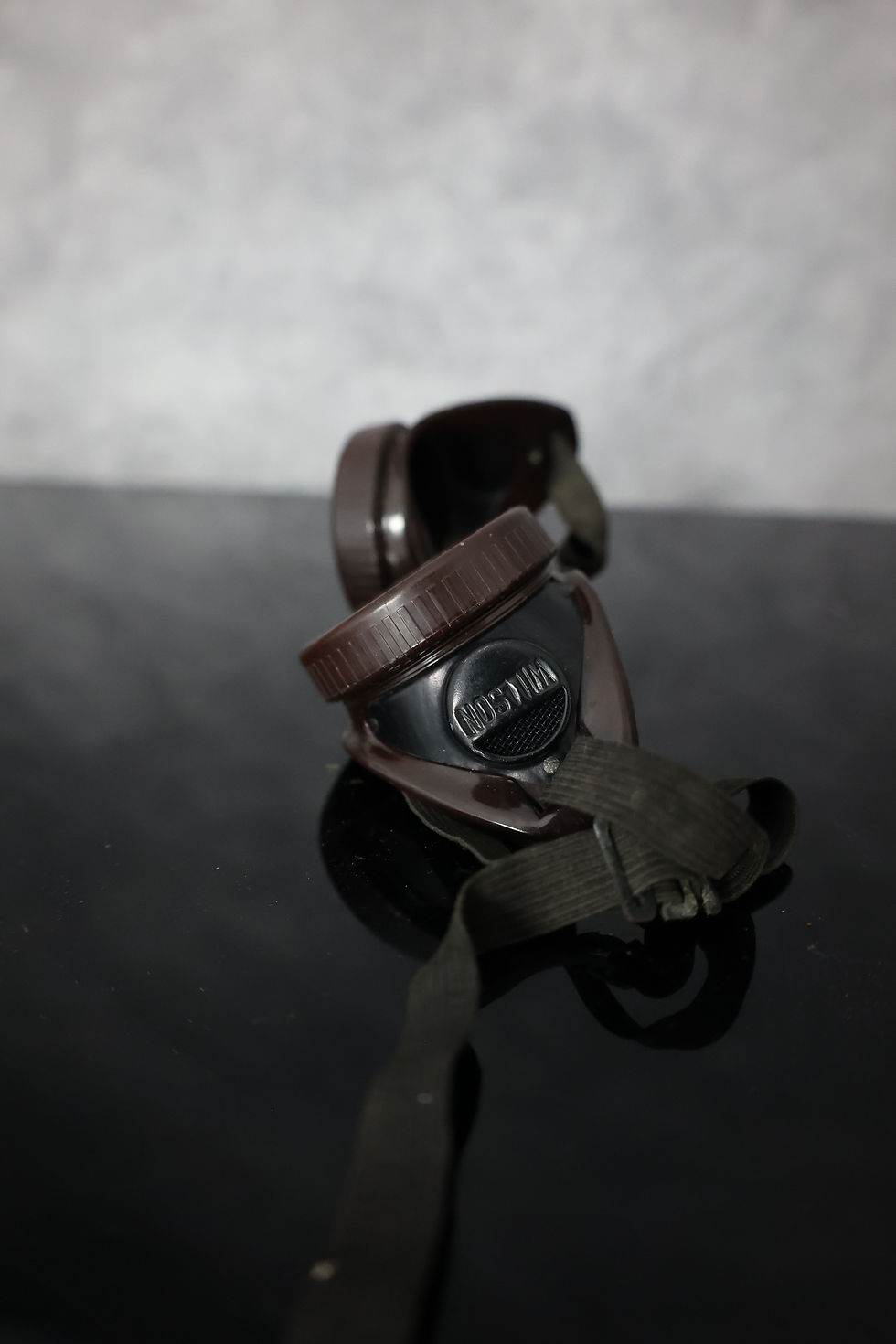
Willson Welding Goggles
Status: Available for Loan Consideration for exhibition, institutional study, research on industrial safety, occupational health, or approved placement.

Willson Welding Goggles
United States
c. 1930s–1950s
Plastic (early polymer), glass lenses, elastic or fabric strap, metal fittings
Dating
These goggles are best dated to the mid-twentieth century, circa 1930s–1950s, based on their materials and form. The use of molded plastic frames, rather than earlier leather or metal-only constructions, reflects advancements in industrial manufacturing and safety equipment design during this period. The compact, rounded lenses and integrated ventilation details are consistent with protective eyewear developed for industrial and welding applications in the early-to-mid twentieth century, particularly as safety standards became more formalized.
Object Description and Construction
The goggles feature dual circular glass lenses set within a molded frame, likely made of early plastic such as Bakelite or a similar synthetic material. The side vents, visible on the frame, were designed to reduce fogging while still protecting the eyes from sparks, debris, and harmful light exposure. An adjustable elastic or woven strap secures the goggles to the wearer’s head, allowing for a snug fit during physical labor. The lenses appear darkened or treated, indicating use for welding or other tasks involving bright or hazardous light.
Function and Use
Goggles of this type were used in industrial settings such as metalworking, welding, and machining, where workers were exposed to flying debris, intense الضوء, and potentially harmful radiation from heated metals. Protective eyewear became increasingly essential as industrial processes grew more mechanized and hazardous. These goggles would have been worn for extended periods, forming a critical part of personal protective equipment for workers in factories, workshops, and construction environments.
Historical Context: Willson and Industrial Safety
The history of Willson protective equipment provides important context for these goggles.
Founded in 1871 by Gile J. Willson and Dr. Thomas A. Willson in Reading, Pennsylvania, the company initially focused on optical glass production before expanding into safety equipment. Their early innovations addressed the dangers posed by industrial labor, particularly the harmful rays generated by metalworking processes. By the late nineteenth century, the company was already producing specialized lenses designed to protect workers’ eyesight.
As industrialization accelerated, Willson became a leader in the emerging field of occupational safety, expanding into protective equipment for miners, factory workers, and later military personnel. The establishment of the National Safety Council in 1913 and the growing emphasis on standardized safety practices further increased demand for such equipment. By the 1920s and 1930s, Willson’s products reflected a broader shift toward comprehensive worker protection, including eye, respiratory, and headgear.
During World War II, the company produced specialized goggles and equipment for military aviation, further advancing protective technology. By the mid-twentieth century, Willson had become synonymous with industrial safety gear, and products like these goggles illustrate the company’s role in shaping modern standards for workplace protection. The transition to plastic materials and improved lens technology during this period reflects both technological innovation and increasing awareness of worker safety.
Provenance
No provenance is currently known for these goggles.
Conclusion
These Willson welding goggles are representative of mid-twentieth-century advances in industrial safety equipment. Combining protective lens technology with durable, mass produced materials, they reflect the growing institutional emphasis on worker protection during a period of rapid industrial expansion. As artifacts, they illustrate both the physical risks of industrial labor and the technological responses developed to mitigate those dangers, offering insight into the evolution of occupational health standards.
Sources
Willson Products History. Eyeglasses Warehouse.https://www.eyeglasseswarehouse.com/pages/willson.html
Optical Company Museum Archive. “Willson Protective Glasses.”https://museum.aco.org.au/archive/363-willson-protective-glasses
Smithsonian Institution. “Protective Equipment and Industrial Safety.”https://americanhistory.si.edu/collections
National Safety Council. “History of Workplace Safety Standards.”https://www.nsc.org


Comments