
Ambrotype Portrait of Woman
- Mar 21
- 5 min read
Updated: Mar 21
Status: Available for Loan Consideration for exhibition, institutional study, research on early photographic processes and nineteenth-century portrait culture, or approved placement.

Ambrotype Portrait in Case
United States or Europe,
c. 1855–1870
Glass plate ambrotype (collodion positive), gilt metal mat, hinged case with velvet lining and clasp closure
Dating & Attribution
This object is identified as an ambrotype portrait, a photographic format widely used between approximately 1855 and 1870, during the early development of photographic portraiture. Ambrotypes were created using the wet collodion process, in which a glass plate was coated with light-sensitive chemicals, exposed in a camera, and then developed to produce a direct positive image when viewed against a dark background.
The format emerged as a more affordable and accessible alternative to the daguerreotype, quickly becoming one of the most popular portrait methods of the mid-nineteenth century. The presence of a glass image plate, gilt decorative mat, and protective hinged case aligns closely with known examples of ambrotypes produced during this period.
The sitter’s clothing and presentation are particularly the modest dress, central pose, and restrained styling. Which in turn, further supports a date within the mid-nineteenth century, when portrait photography became increasingly available to the middle class.
Construction and Object Design
The ambrotype consists of a glass plate photograph mounted behind a decorative gilt metal mat, which frames the image and protects its edges. The glass plate is backed by a dark surface, allowing the underexposed negative image to appear as a positive when viewed from the front.

The image is housed within a hinged protective case, typically constructed from wood or a composite material and covered in leather or paper. The interior of the case is lined with colored velvet or fabric, in this example a deep red, which both cushions the image and enhances its visual presentation.
A notable feature of the case is its metal clasp closure, designed to secure the object when not in use. This clasp played a critical role in preservation, protecting the fragile glass plate from dust, light exposure, and physical damage. Because ambrotypes are unique, non-reproducible images, maintaining their physical integrity was essential.
The case format reflects the importance of these objects as personal keepsakes, intended to be held, opened, and viewed privately rather than displayed openly like later photographic prints.
The Ambrotype Process
The ambrotype is part of the collodion positive process, introduced in the 1850s as a major advancement in photography. The process involved coating a glass plate with collodion, sensitizing it in a silver nitrate solution, exposing it in a camera while still wet, and then developing it immediately.
Unlike later photographic methods, the ambrotype produced a one-of-a-kind image, meaning that each photograph is a singular object rather than a reproducible print. This uniqueness contributes to its significance as both a photographic and personal artifact.
Because the image is formed on glass, it is inherently fragile. The protective case and internal mounting system were therefore essential components of the object, ensuring its survival over time.
Portrait Culture in the Mid-Nineteenth Century
Ambrotypes played a central role in the rise of portrait photography as a social practice. For the first time, individuals outside of the elite classes could afford to have their likeness recorded. These images were often commissioned to commemorate important life events, preserve family memory, or document personal identity.

The subject of this portrait is presented in a formal, composed manner, consistent with the conventions of mid-nineteenth-century photography. Long exposure times required sitters to remain still, resulting in the characteristic direct gaze and restrained posture seen in ambrotype portraits.
Such images were often exchanged between family members or kept as treasured personal objects. They served as tangible connections to loved ones, particularly in an era when travel, illness, and mortality made physical separation more common.
The Case and Clasp: Protection and Meaning
The hinged case and clasp are integral to the function and meaning of the ambrotype. The case provided physical protection, shielding the delicate glass plate from environmental damage. The clasp ensured that the case remained securely closed, preserving the image inside.
Beyond its practical purpose, the case also contributed to the object’s role as an intimate, portable keepsake. Opening the case to reveal the image created a deliberate and personal viewing experience, reinforcing the emotional significance of the photograph.
The use of velvet lining and decorative metal framing further elevated the object, transforming it from a simple photograph into a carefully crafted artifact that combined technology, craftsmanship, and sentiment.
User Context: Who Would Have Owned This
This ambrotype would most likely have been owned by a middle-class individual or family during the mid-nineteenth century. The cost of ambrotype photography was significantly lower than earlier processes, making it accessible to a broader segment of the population.
The sitter’s presentation suggests a desire to convey respectability and social identity, reflecting the importance of portraiture in constructing and preserving personal and familial narratives.
Such an object would typically have been kept in the home, carried on one’s person, or stored among other personal belongings, serving as a lasting representation of the individual depicted.
Condition and Material Evidence
The ambrotype retains its original glass plate, gilt mat, and hinged case. The image remains visible, with tonal qualities consistent with the collodion process. The case shows wear appropriate to its age, including minor surface wear and patina.
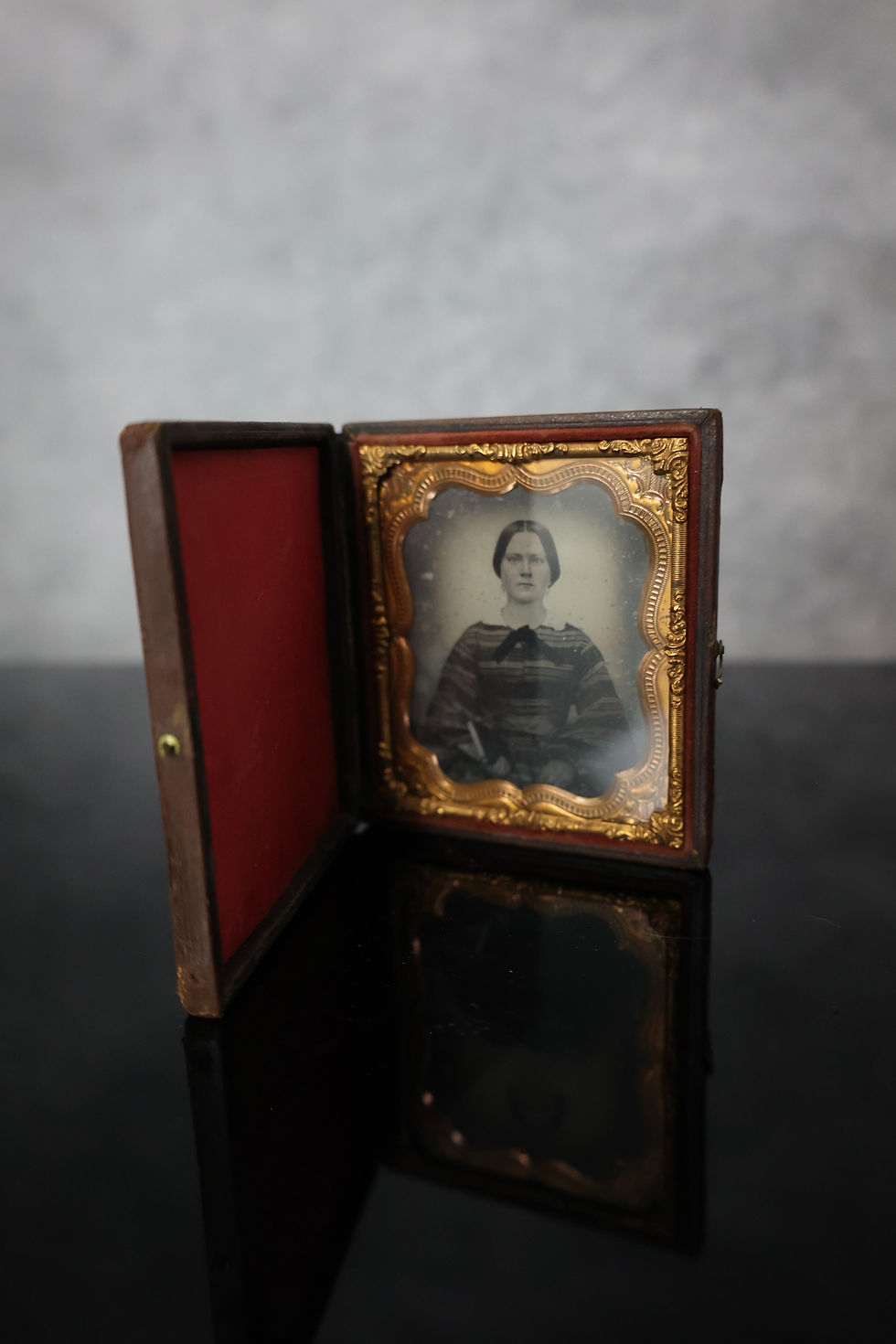
The clasp mechanism remains present, indicating that the protective function of the case has been largely preserved. The interior lining shows expected aging but continues to provide structural support for the image.
Provenance
This ambrotype portrait was acquired through a private sale, with no additional ownership history currently known.
Conclusion
This ambrotype portrait represents a key moment in the history of photography, when advances in technology made personal portraiture widely accessible for the first time. Combining fragile glass imagery with protective casing and decorative elements, the object reflects both the technical innovation and emotional significance of early photographic practice.
As a unique, non-reproducible image, the ambrotype serves as both a visual record and a personal artifact, preserving the likeness and presence of an individual from the mid-nineteenth century. Its survival offers valuable insight into early photographic methods, domestic memory culture, and the ways in which people sought to capture and retain their identities in material form.
Sources
Smithsonian National Portrait Gallery. Stabilization of Ambrotypeshttps://npg.si.edu/blog/through-looking-glass-%E2%80%93-stabilization-ambrotype
Oregon State University Libraries. Early Photographic Formats: Ambrotypeshttps://guides.library.oregonstate.edu/earlyphotoformats/ambrotypes
Science and Media Museum. Identifying Collodion Positive (Ambrotype) Photographshttps://blog.scienceandmediamuseum.org.uk/find-out-when-a-photo-was-taken-identify-collodion-positive-ambrotype/
Oshawa Museum. Tales from the Archives: The Ambrotypehttps://oshawamuseum.wordpress.com/2022/06/17/tales-from-the-archives-the-ambrotype/
Indiana University Wylie House Museum. Early Photography: Daguerreotypes, Ambrotypes, Tintypeshttps://collections.libraries.indiana.edu/wyliehouse/exhibits/show/early-photography-wylie/dag-ambro-tin
General reference works on nineteenth-century photographic processes and portrait culture.


Comments