
Geneva Hand Fluter
Status: Available for Loan Consideration for exhibition, textile study, or domestic labor interpretation.

Geneva Hand Fluter
United States
c. late 19th century–early 20th century (likely 1880s–1910s)
Cast iron and metal components
Dating and Identification
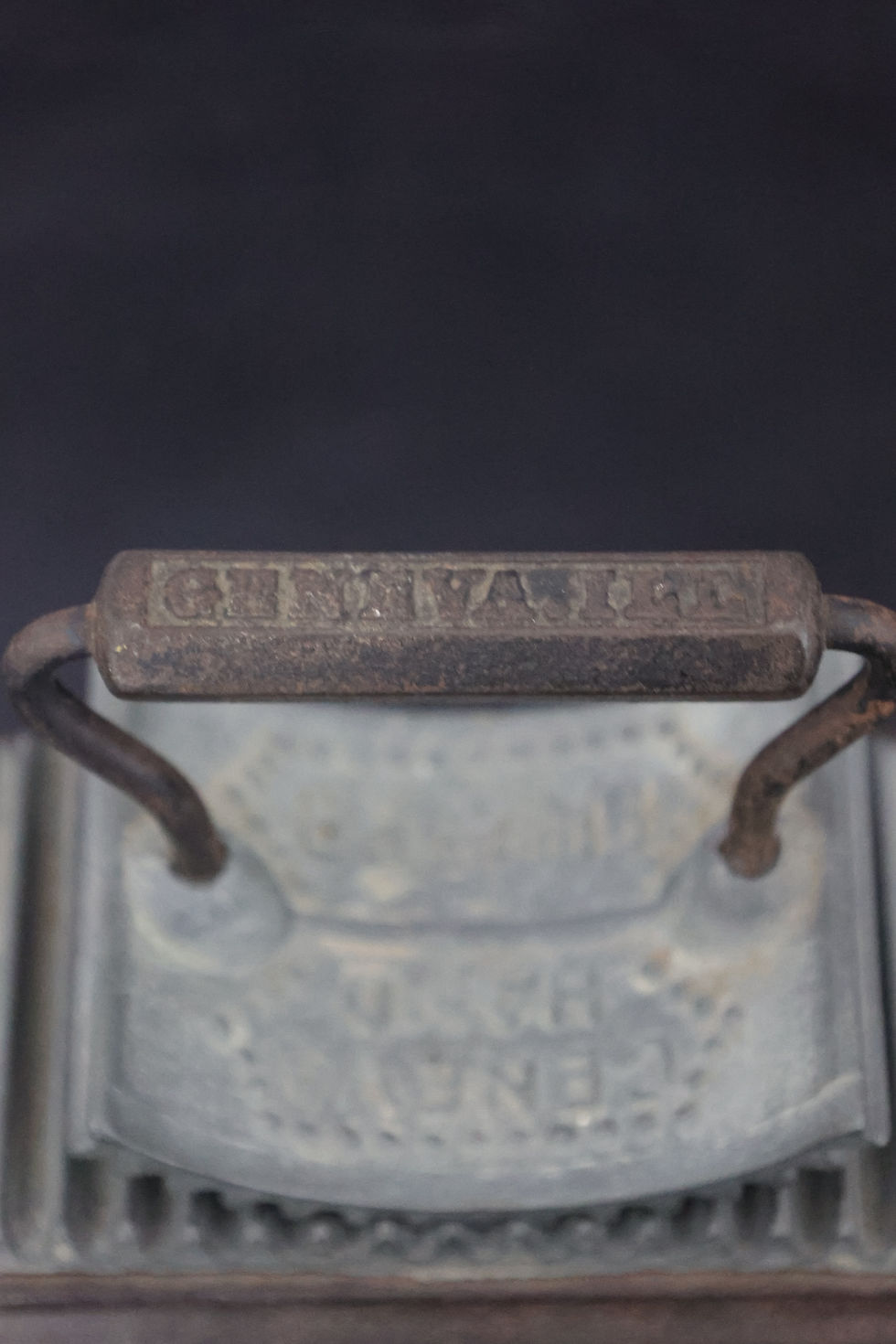
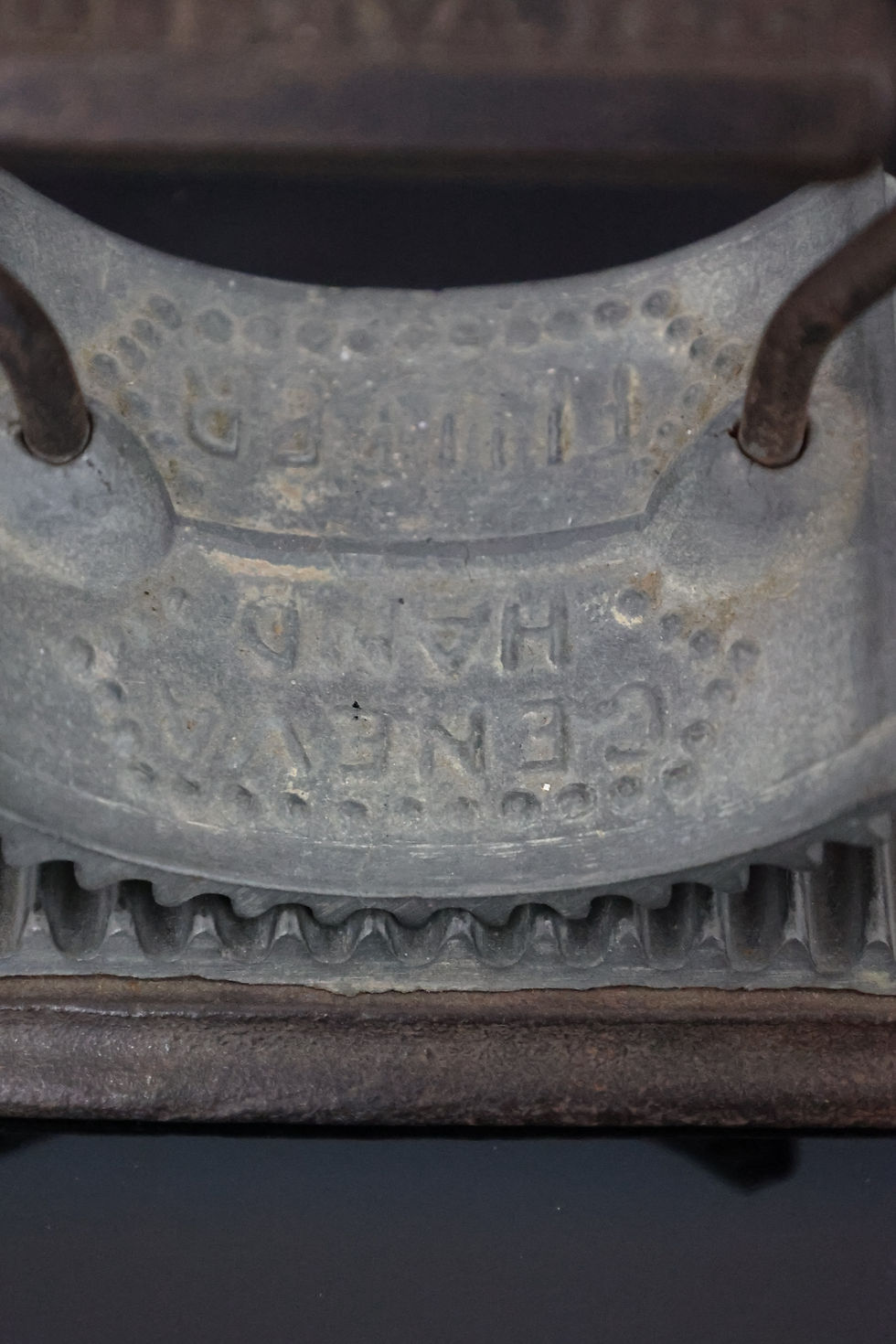
This object is identified as a hand fluter, also known as a ruffling or crimping iron, used to create decorative pleats and fluted edges in fabric. The raised lettering visible on the body reads “GENEVA HAND FLUTER,” which corresponds to a class of patented domestic tools widely produced in the late nineteenth and early twentieth centuries.
The construction and materials strongly support this date range. The combination of cast metal framing, serrated or ridged plates, and a manually operated handle mechanism is characteristic of pre-electric textile tools. These implements were commonly marketed through catalogs and hardware distributors during a period when domestic efficiency and garment presentation were increasingly emphasized.
Function and Operation
The hand fluter was used to create tightly pressed, decorative waves or pleats in fabric, particularly for cuffs, collars, hems, and undergarments. The user would heat the metal plates (often on a stove) and then place dampened fabric between the ridged surfaces. By pressing or rocking the mechanism, the fabric would be shaped into uniform flutes.
This process required both precision and timing. If the iron was too hot, it could scorch fabric; too cool, and the pleats would not hold. As a result, the tool reflects a high level of skill embedded within everyday domestic labor.
Popularity and Domestic Use
Fluting irons were widely used in the nineteenth century, especially during periods when fashion emphasized intricate detailing in clothing. Ruffled trims and pleated embellishments were common in both women’s and children’s garments, making tools like this essential in the home.
Their use declined with the introduction of electric irons and later textile manufacturing processes that could produce pre-pleated fabrics. By the early twentieth century, as clothing production became more industrialized, such hand tools became less central to daily domestic routines.
Typography and Design
The typography on the iron is bold and cast directly into the metal, designed for durability rather than ornament. The wording “GENEVA HAND FLUTER” is functional and declarative, identifying both the type of object and its branding or model.
The design emphasizes mechanical efficiency. The ridged base and curved upper plate are engineered to create consistent pleats, while the handle provides leverage for controlled pressure. The compact size reflects its specialized use, distinguishing it from larger flat irons intended for general pressing.
Material and Condition
The object is composed of cast iron and metal components, with visible oxidation, patina, and surface wear consistent with age. The ridged plates remain intact, and the handle structure shows signs of use but retains its functional form.
Such wear is typical of tools exposed to repeated heating and manual operation. The preservation of its structural integrity suggests it remained intact after its period of regular use.
Provenance
Acquired from an antique dealer; no further documentation available.
Conclusion
The Geneva Hand Fluter represents a specialized tool within the broader history of domestic textile care. Its materials, construction, and function reflect a period when garment presentation relied heavily on manual techniques. As both a functional implement and a historical artifact, it offers insight into the craftsmanship and labor that shaped clothing before the rise of modern manufacturing and convenience technologies.
Sources
Smithsonian Institution, collections on domestic labor and textile tools
Henry Ford Museum, collections on laundry and garment care implements
Library of Congress, domestic life and material culture collections
Antique Trader, reference guides to antique laundry tools
Historic patents and trade catalogs relating to fluting and crimping irons


Comments