
Our Islands and Their People
- Jun 6
- 3 min read
Status: Available for Loan Consideration for exhibition, institutional study, research on Cuba, Caribbean history, travel literature, colonial and postcolonial studies, or approved placement.

Our Islands and Their People
United States
c. 1902–1905
Illustrated cloth bound first edition volume with photographic plates and gilt stamped cover
Dating & Attribution
This volume, titled Our Islands and Their People, belongs to a popular early twentieth century series documenting territories and islands that had recently come under increased American attention following the Spanish American War of 1898.
Based on the binding style, photographic reproductions, typography, and content focused on Cuba and other Caribbean islands, this example dates to approximately 1902 through 1905. The book appears to be an early edition produced during the first years of American involvement in the Caribbean following Spain's defeat.
Historical Context
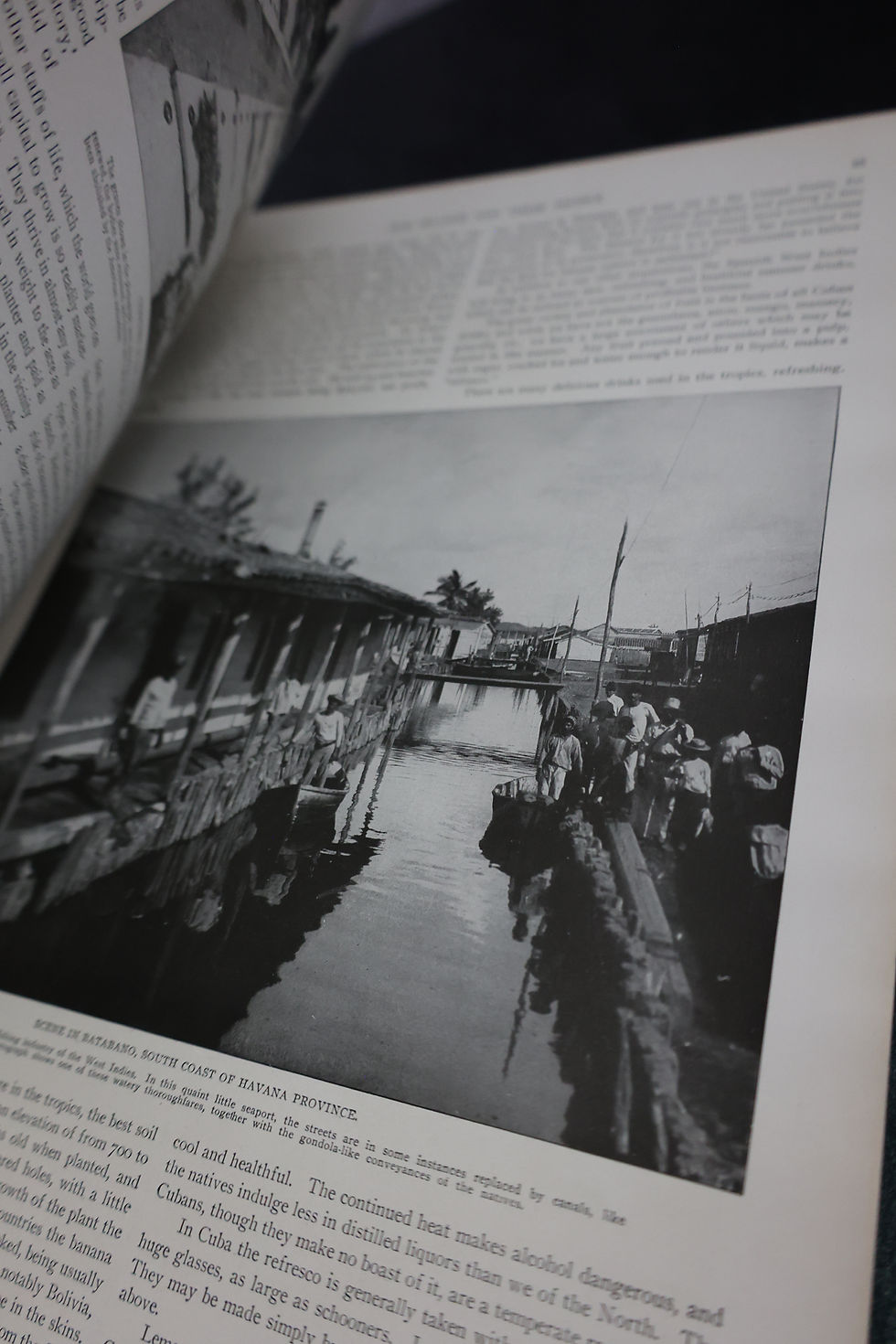
The publication emerged during a period when many Americans were eager to learn about Cuba, Puerto Rico, Hawaii, and other islands that had become strategically important to the United States.
The Spanish American War transformed the political relationship between the United States and much of the Caribbean. Cuba formally gained independence in 1902, yet American political and economic influence remained substantial. Books such as this introduced readers to places that many had previously known only through newspaper reports of war and diplomacy.
The volume combines travel writing, geography, photography, history, and descriptions of local customs. It reflects how Americans at the beginning of the twentieth century attempted to understand newly connected regions of the world.
Interpretation
Today, the book serves as more than a travel volume. It provides insight into how Cuba and the Caribbean were presented to American audiences during the age of expansion.
The photographs of Havana, Santiago de Cuba, Morro Castle, rural villages, landscapes, and everyday life reveal what publishers believed readers wanted to see. At the same time, the text reflects many of the assumptions and perspectives common among American writers of the period.
As a historical source, the book documents both the islands themselves and the ways they were interpreted through an American lens.
Why This Record Exists
Publications like Our Islands and Their People were produced to educate, inform, and entertain readers interested in newly prominent regions of the world. They functioned as reference works, travel literature, and cultural surveys.
Before radio documentaries, television, or the internet, illustrated books were among the primary ways ordinary people learned about distant places. Detailed photographs and descriptive text allowed readers to explore locations they would likely never visit.
Because the book was published during the formative years of modern United States and Cuba relations, it also serves as a valuable record of how that relationship was presented to the public.

Condition and Evidence of Use
The volume exhibits wear consistent with age and long term use. The cloth binding shows areas of fading and edge wear, particularly at the corners and spine. The gilt title remains visible, and the interior pages retain photographic illustrations and printed text.
The marbled page edges and substantial binding reflect the quality of publishing standards common in illustrated reference books of the early twentieth century.
Provenance
This volume was acquired through a private sale. No additional ownership history is currently known.
Conclusion
Our Islands and Their People represents an important example of early twentieth century illustrated travel and cultural literature. Published during the years immediately following the Spanish American War, it captures American curiosity about Cuba and the wider Caribbean at a moment when political, economic, and cultural connections between the regions were rapidly expanding.
Today, the book serves as both a visual record of the islands it depicts and a historical artifact documenting how Americans understood the Caribbean during the opening years of the twentieth century.
Sources
Library of Congress, Caribbean and Latin American Collections https://www.loc.gov
HathiTrust Digital Library, Our Islands and Their People editions https://www.hathitrust.org
Internet Archive, Early Twentieth Century Travel and Geographic Publications https://archive.org
University of Florida Digital Collections, Caribbean History Resources https://ufdc.ufl.edu
Office of the Historian, United States Department of State, United States and Cuba Relations https://history.state.gov


Comments