
Hien Fong Essence / “Green Drops” Patent Medicine Bottle
Status: Available for Loan Consideration for exhibition, institutional study, research, or approved placement.

Hien Fong Essence / “Green Drops” Patent Medicine Bottle
United States, c. 1900–1925
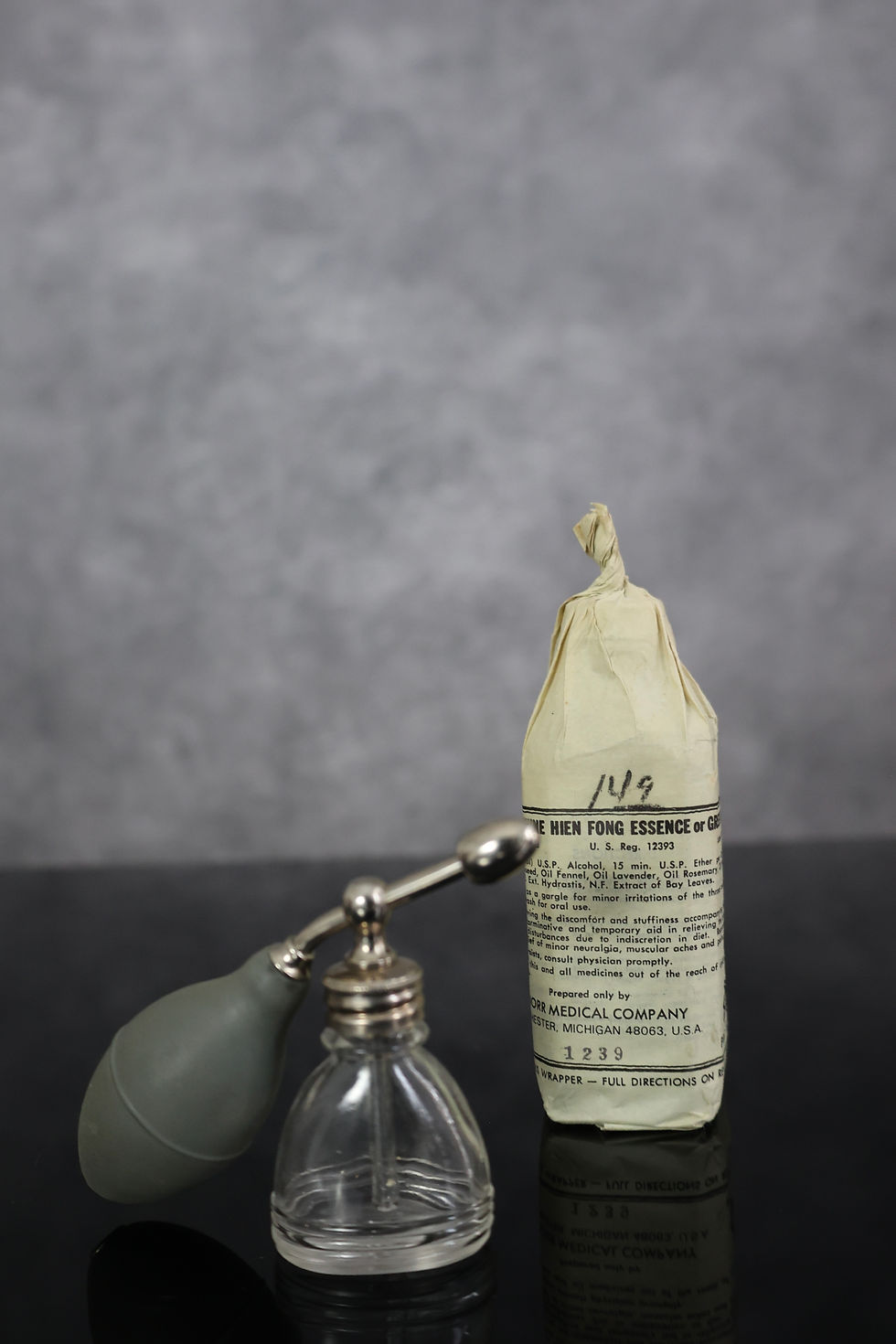
Glass bottle with original printed paper wrapper
Dating & Attribution
This object is identified as a patent medicine bottle containing Hien Fong Essence, also marketed as “Green Drops,” and dates to the early twentieth century, approximately c. 1900–1925. The dating is supported by the bottle’s packaging, labeling language, pricing, regulatory references, and historical documentation of the product’s manufacture and distribution.
The use of a printed paper wrapper covering a glass bottle is a key diagnostic feature. This packaging method was common in the late nineteenth and early twentieth centuries, prior to the widespread adoption of fully printed glass bottles and standardized pharmaceutical labeling mandated by later federal regulations. The label’s reference to U.S. registration, inclusion of ingredient listings, and absence of modern warning language place it after the late nineteenth century but before mid-century pharmaceutical reforms.
The printed price of $1.50 further supports an early twentieth-century date, reflecting the premium pricing often associated with proprietary medicines during this period. Newspaper references and historical research confirm Hien Fong as an established product circulating in American communities by the early 1900s, particularly within immigrant and regional markets.
Condition & Preservation (Unopened with Contents Intact)
This example of Hien Fong Essence (“Green Drops”) is notable for surviving in an unopened state, with the original liquid contents still present inside the bottle. The twisted and sealed paper wrapper at the neck remains intact, indicating the bottle was never opened for use or was sealed immediately after purchase and stored undisturbed.
The presence of the original liquid medicine is exceptionally rare. Most patent medicine bottles encountered today are either:
empty,
missing their paper wrappers,
or were opened and discarded once consumed.
In contrast, this bottle represents a complete pharmaceutical artifact, preserving not only its container and label but also the substance it once promised as treatment.
Ingredients, Claims, and Use
The label text indicates a formula composed of alcohol and essential oils (including peppermint, rosemary, fennel, and bay leaves) ingredients commonly found in patent medicines of the era. These substances produced noticeable sensory effects (cooling, numbing, warming), which reinforced perceptions of efficacy.
The product was marketed for throat irritation, colds, minor pains, and general discomfort, reflecting the broad, non-specific claims typical of proprietary medicines before stricter advertising regulation. Instructions for use and warnings to keep out of the reach of children appear in restrained language, lacking the explicit disclaimers required after later federal acts.
The name “Green Drops” itself echoes a long-standing tradition of color-based medicine branding, where distinctive appearance and taste reinforced memorability and consumer trust.
Regulation and Transition
This bottle sits at a critical moment in American pharmaceutical history. By the early twentieth century, public concern over misleading claims and undisclosed ingredients was growing. The Pure Food and Drug Act of 1906 marked a turning point, requiring more transparency in labeling and limiting false advertising.
Hien Fong Essence appears to straddle this regulatory shift. Its inclusion of ingredient information suggests compliance with emerging standards, while its continued use of broad therapeutic claims reflects lingering nineteenth-century marketing practices. Later references to the product indicate that it survived, in altered form or reputation, well into the twentieth century, becoming part of local memory and folklore.
Wear, Fragility, and Survival
The paper wrapper shows creasing, softening, and age-related discoloration, consistent with long-term storage rather than modern reproduction. Such wear underscores the object’s fragility and rarity. Most patent medicine bottles survive without labels, making intact examples especially valuable for historical interpretation.
The twisted paper seal at the top suggests the bottle was once unopened or carefully resealed, further enhancing its documentary value.

Decline of Patent Medicines
By the mid-twentieth century, advances in medical science, stricter regulation, and the rise of prescription pharmaceuticals led to the decline of traditional patent medicines. Many products disappeared entirely, while others were reformulated into regulated over-the-counter remedies.
Today, bottles like this are understood not as effective treatments, but as material evidence of how Americans understood health, illness, and care in a period of transition.
Conclusion
This Hien Fong Essence (“Green Drops”) bottle is a high-confidence early twentieth-century patent medicine, dating to approximately 1900–1925. Its paper-wrapped packaging, ingredient profile, pricing, and documented historical presence firmly situate it within the era when household remedies bridged the gap between folk practice and modern medicine.
Within an archive, it represents more than a medical product. It embodies trust, hope, marketing, and the everyday strategies families used to manage health before the full professionalization of healthcare.
Sources
The Times, “Hien Fong” reference (October 1, 1978)https://www.newspapers.com/article/the-times-1-oct-1978-hien-fong/7206135/
Wendish Research Exchange, “Is There a Doctor in the House?”https://wendishresearch.org/2012/05/18/is-there-a-doctor-in-the-house/
Young, James Harvey. The Toadstool Millionaires: A Social History of Patent Medicines in AmericaPrinceton University Press. (Contextual reference)


Comments